Here is a link to our project website: http://www.etc.cmu.edu/projects/blacklight-studios/
Blacklight Studios was a semester-long pre-production development team of the Entertainment Technology Center’s year long game studio project. Our mission was to lay the groundwork for a tactical RPG that brings a unique twist to the format. This includes design documents, playable prototypes of major game mechanics, concept art, and narrative details. The studio developed a pre-production package that can be used by a team in Fall 2020 to produce and publish a game. Most importantly, the goal of Blacklight Studios was to explore and experience real world hardships of the pre-production process, and receive insight into the importance of pre-production in a professional space.

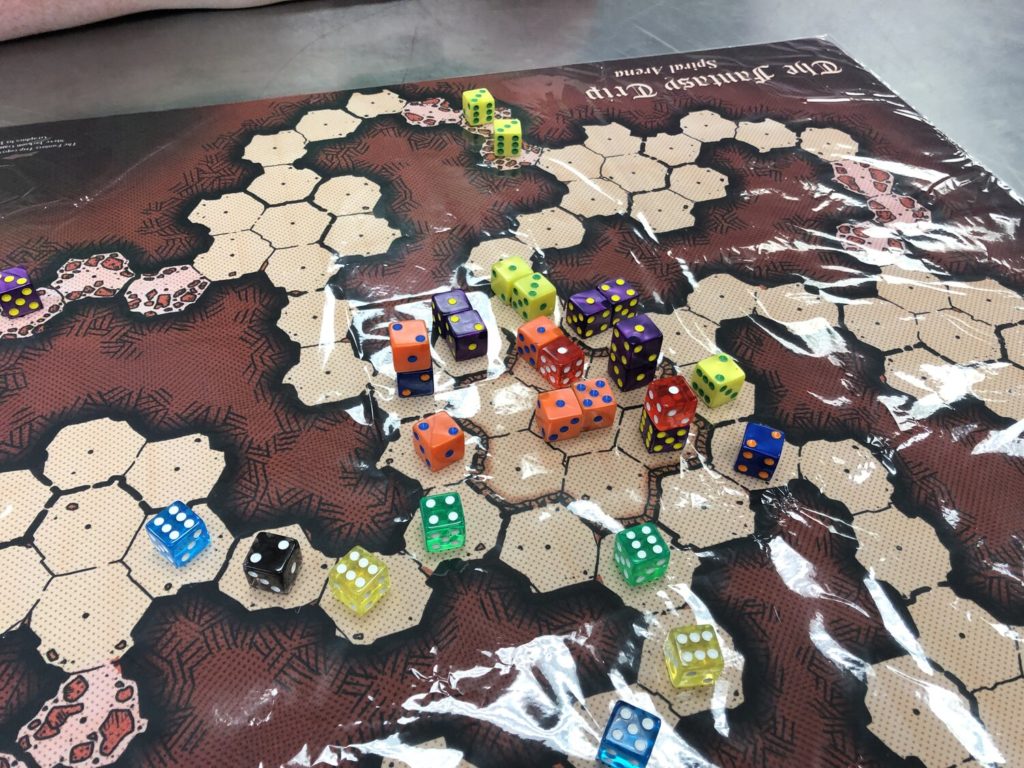

As a designer on the team, I contributed toward the design of our game’s mechanics and balancing through brainstorming and iteration, working closely with Yang, the other designer on the team. I proofread and suggested changes or additions for all the design documents that Yang created while also making Test Case documents to go along with the mechanics focused design documents to help with QA testing. I also performed the bulk of our team’s QA testing, which involved maintaining a living document of identified bugs while we were working on our combat demo.
Our pre-production package did not actually get picked up and continued by a team in the Fall of 2020 because the theme of the game does not coexist well with the emergence of the Covid-19. We were far enough into the semester by the time the pandemic started and caused our team to have to work remotely, that we wanted to stay the course finishing what we started rather than trying to pivot our whole game to something that feels less distasteful. Our vision for the game is not a bad one, but the timing for such a vision likely could not have been worse.